Math History: A Long-Form Mathematics Textbook
I recommend a book that traces the history of mathematics through its evolutionary journey: Math History: A Long-Form Mathematics Textbook. Starting with the most fundamental mathematical problems, the book gradually introduces mathematical concepts for solving them. By viewing history through a mathematical lens—as if problems were driving history forward—each mathematical problem takes center stage in this book.
I. How to Measure? The Birth of Numbers and Ratios Numbers are abstract representations of quantity, used to define the relationship between the quantity of an object and a unit of measurement. Ratios, on the other hand, are used to express the relationship between different events; for example, in a class, the ratio of boys to girls is 2 to 1.
II. How to Describe Shapes? The Birth of Geometry Geometry originated from human observations of astronomy and geography. It was first developed by Greek mathematicians into a fixed logical system of “definitions, postulates, axioms, and proofs.” Geometry not only describes shapes but also enables logical reasoning.
III. How to Express Change? The Birth of Variables and Functions Static numbers cannot represent the continuous changes in phenomena, so variables and functions emerged, eventually evolving into calculus. Mathematics could now be used to describe the dynamic properties of things.
IV. How to Handle Uncertainty? The Birth of Probability Mathematicians do not believe in luck; they studied the probability of winning in gambling games, which led to the development of probability theory.
V. How to Unify Structures? The Birth of Abstract Algebra Different objects across various fields exhibit similar patterns, such as symmetry and reversibility. This led to the development of abstract concepts like groups, rings, and fields, elevating mathematics to a whole new level.
As can be seen from the above, mathematics is not merely an accumulation of knowledge; its development represents the continuous evolution of expressive capabilities (through layers of abstraction). Numbers are used to represent quantity, algebra to represent relationships, functions to represent change, and structure to express the commonalities of things. The author of this book also rejects the notion of a “genius of calculus,” arguing that the emergence of calculus was a historical inevitability—even without Newton and Leibniz, there would have been others like Merton and Gombrich.
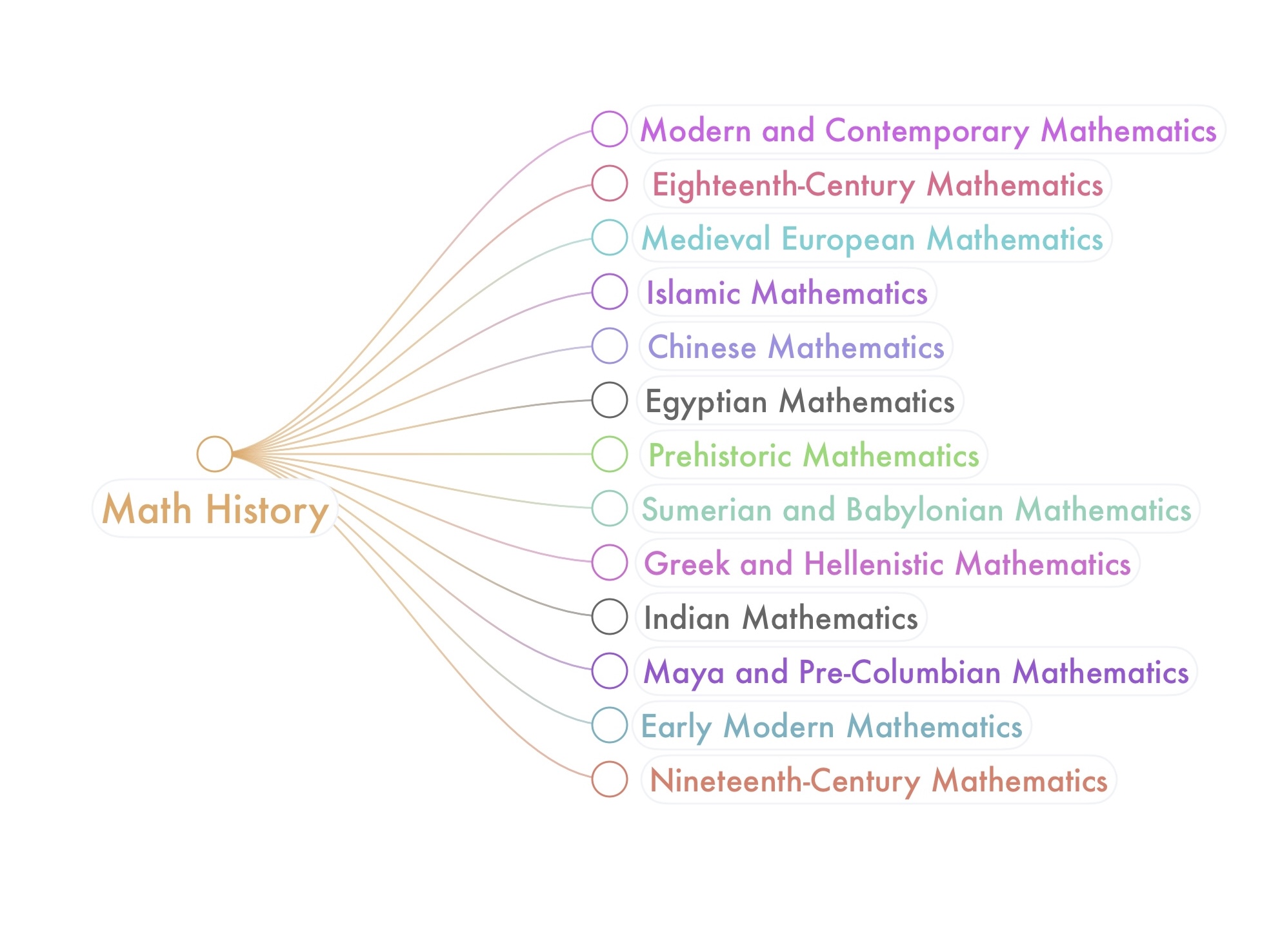
This book demonstrates to readers how people throughout history have thought about mathematics. It explores the problems mathematicians have focused on, how they have expressed these problems, and how they have solved them. The book also highlights the humanistic dimension of mathematics—the figures who have influenced the field and the worlds in which they lived, the differences in mathematical methods across cultures, and how the pursuit of mathematics has spread across the globe.