How should engineering students learn mathematics?
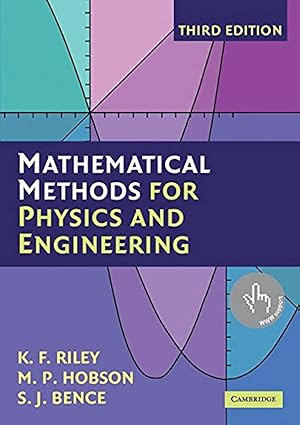
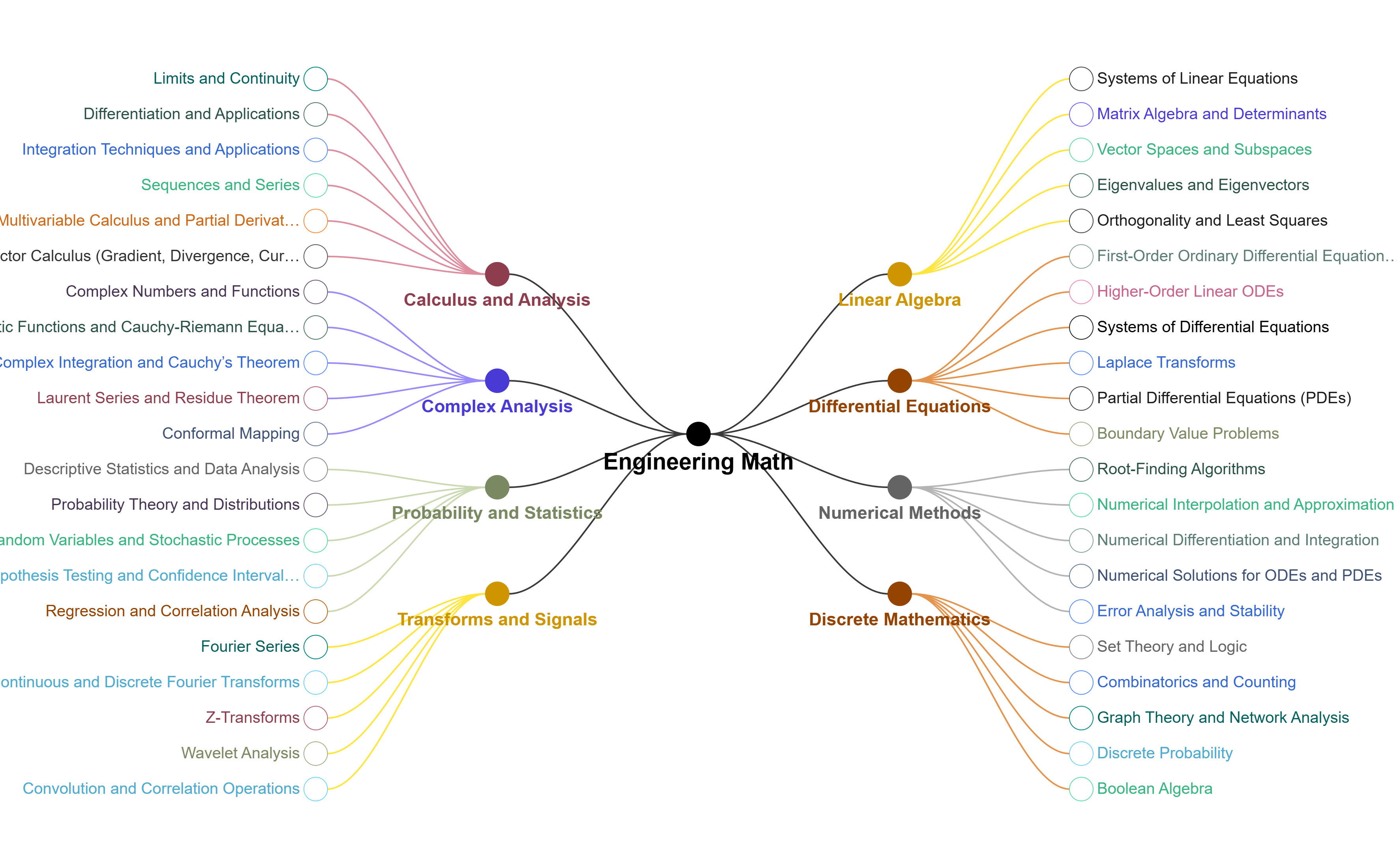
For engineering students, the primary focus of mathematics learning is solving practical engineering problems. The required depth isn’t as high as that of a mathematics major, nor as superficial as that of a humanities student. I recommend a mathematics book specifically written for engineering students: Mathematical Methods for Physics and Engineering: A Comprehensive Guide. This book covers calculus, differential equations, vector analysis, partial differential equations, probability and statistics, numerical methods, and complex analysis, encompassing almost all the mathematical knowledge used in engineering. Each mathematical concept is paired with a corresponding engineering physics problem (e.g., complex numbers – circuit oscillations, Poisson’s equation – electrostatics, fluid mechanics). It can be used as a reference book or a self-study resource.
This book is quite long, approximately 1300 pages in total (third edition). It mainly covers mathematical methods for undergraduate studies, with a small portion for graduate studies, and includes exercises at three different levels (basic, intermediate, and applied). This book does not require students to master rigorous proofs and theoretical derivations. Its main purpose is to teach students that recognizing a Fourier transform indicates signal decomposition, and recognizing a Laplace transform indicates causality analysis. It aims to enable students to quickly find corresponding mathematical methods for practical engineering problems. Essentially, engineering students only need to master the mathematical knowledge presented in this book.
This book has three authors, all professors of physics at Cambridge University. Kenneth F. Riley designed the book’s framework, M. P. Hobson wrote the content, and S. J. Bence wrote the examples and exercises. The three have a long-standing collaborative teaching relationship and worked seamlessly together on the book, covering all undergraduate-level mathematical knowledge. The book has been very popular with students and has been recommended by professors at other universities as a mathematical reference.