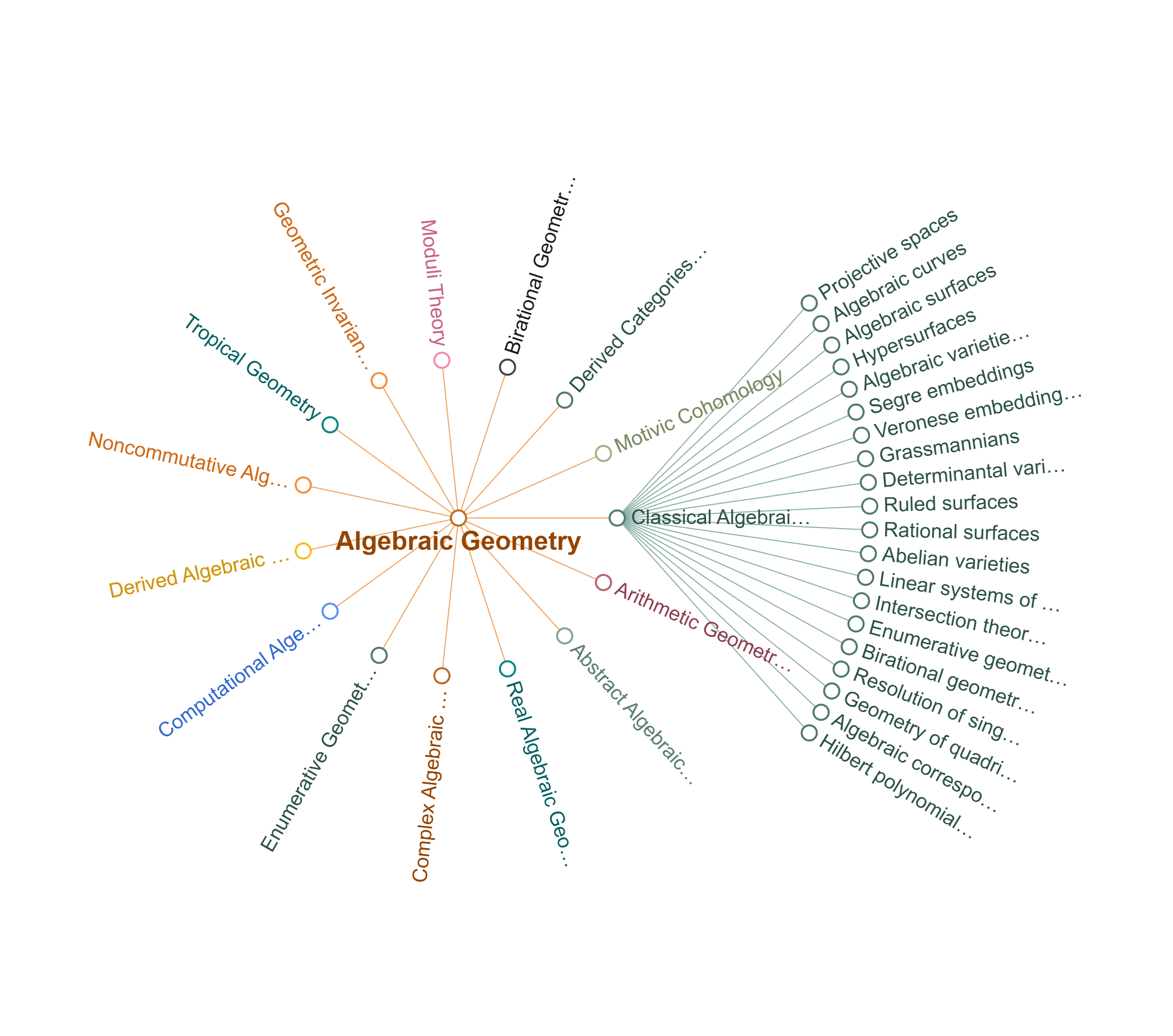
How should one go about studying algebraic geometry?
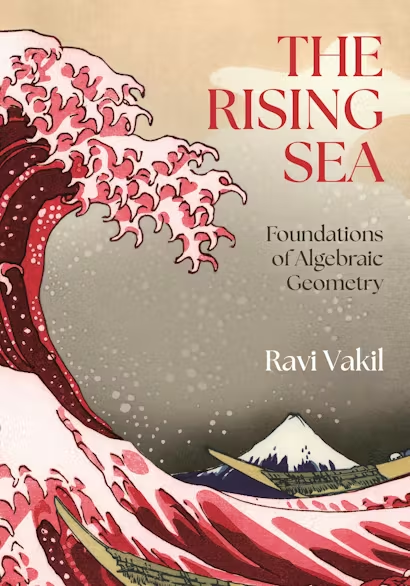
I recommend a book that teaches you how to think like an algebraic geometer: The Rising Sea: Foundations of Algebraic Geometry. The author likens solving mathematical problems to cracking a nut: one method involves smashing it open with a hammer, while the other involves soaking the nut in seawater and waiting for it to split open naturally. This book employs a similar approach—advancing layer by layer through rigorous methods—to ultimately render complex mathematical conclusions simple and accessible.
Mastering algebraic geometry is a gradual process. Through accessible yet rigorous exposition, this book lays a solid foundation for readers to deeply understand the powerful ideas that shape the landscape of mathematics, while also helping them build an intuition for complex mechanisms. The book begins by exploring category theory and sheaves, then develops the concepts of schemes and varieties—serving as examples of “geometric spaces”—and proceeds to discuss their specific properties in detail. It also covers topics such as dimension and smoothness, vector bundles and their natural generalizations, as well as important cohomological tools and their applications.
The author, Ravi Vakil, is the Robert Grimmett Professor of Mathematics at Stanford University and the President of the American Mathematical Society. This book originated as lecture notes for his courses at Stanford, which were subsequently organized and published in book form. The author believes that mastering algebraic geometry requires extensive practice through problem-solving; consequently, readers often observe that while the book looks like a standard textbook on the surface, it functions, in practice, as a comprehensive collection of exercises. Within the text, the author provides detailed explanations for the more challenging sections. Although algebraic geometry is a difficult subject, the author recommends learning it through practice rather than requiring students to first complete foundational courses—such as homological algebra or complex geometry—before diving in; instead, he suggests looking up concepts as they arise during the learning process, arguing that this approach actually yields better results.
Furthermore, this book does not adhere to the terse, highly condensed style typical of traditional textbooks; instead, it reads much like a learned, seasoned professor delivering a one-on-one lecture, providing detailed context and motivation behind the theorems presented. As such, it is ideally suited for self-study, enabling readers to master algebraic geometry without the need for direct guidance from an instructor. Finally, the book is substantial in scope—the latest 2025 edition spans 688 pages—so undertaking its study requires a certain degree of patience.